
Podcast: Play in new window | Download (Duration: 48:39 — 66.8MB)
For many of us, reading to a child feels like a cherished bedtime ritual. But what if the benefits begin long before birth?
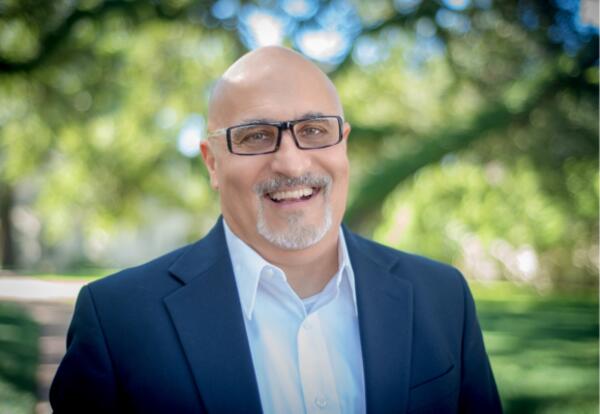
In this fascinating episode of Discover Lafayette, we visit with Dr. Joe Abraham, physician, research biologist, award-winning author, former president of the Lafayette Parish Library Foundation, and president of the Acadiana Educational Endowment, about the life-changing impact of reading with children beginning in the prenatal period.
The Acadiana Educational Endowment, founded in 1989 to support public education across Acadiana, has invested more than $650,000 in educational initiatives over the years. Today, its primary focus is Reading With Kids, an initiative encouraging parents to read to children from pregnancy through the preschool years because, as Dr. Abraham believes, “children are the most precious thing in life.”
Dr. Abraham’s passion for the project grew from decades practicing emergency medicine. After observing thousands of children, he began noticing a pattern.
“I kept coming back to the ones who are cooperative. The ones who are inquisitive. The ones who are engaged, are read to.”
He says he can often recognize these children before they can even speak. “I got to the point that I can spot a child at six months of age or earlier. The child is tracking. They’re listening.”
“There’s this idea of fetal education. It’s well known in China and Korea. There’s recent research that if you read and talk to your child in the womb, particularly in the third trimester, they can show when they’re born that their brains are advanced. I will meet children who are just spooky smart at two, and they’ve been read to in the womb. Socioeconomic level is totally irrelevant.”
That observation led him to explore decades of research connecting early language exposure with lifelong educational and social outcomes. Dr. Abraham explains that research indicates “60% of kids who are not prepared to read by the first grade will end up in jail or on welfare.”
While many people have heard that reading proficiency by third grade predicts later success, Dr. Abraham argues that the foundation is laid much earlier, even before birth. He points to emerging research showing that babies exposed to language during pregnancy, particularly in the third trimester, demonstrate measurable neurological differences after birth. “They can show when they’re born that their brains are advanced.”
One French study cited on the Reading With Kids website found that newborns whose mothers regularly read and spoke to them during pregnancy exhibited more advanced neural centers for language acquisition. Another ultrasound study observed babies moving their mouths in response to familiar spoken sounds spoken by the mother before birth.
Yet Dr. Abraham repeatedly emphasizes that the science is only part of the story. “The child is not interested in the book. The child is interested in the warm body, the human that will protect them.”
He believes reading creates a powerful emotional bond. “The bond between parent and child extends to the book.” This relationship, he explains, becomes what ultimately motivates children to learn.
“Changing the world one child at a time“
Throughout our conversation, Dr. Abraham returns to one central theme: reading is about much more than literacy. When children are read to, they begin developing empathy, imagination, curiosity, and the ability to understand perspectives different from their own. “When you read, you slowly come to understand other people’s perspectives.”
Reading, he says, becomes “the laboratory of the mind.”
That perspective also shapes his concerns about modern society. “We live in a time in which people can’t talk anymore.”
Dr. Abraham believes that reading helps people hold thoughtful conversations because it teaches them that disagreement does not necessarily mean someone is wrong; it often simply reflects a different perspective.
Our conversation also explored what Dr. Abraham calls “book deserts.” In some communities, he says, there may be only one book available for every 300 children living there.
To address that problem, Reading With Kids has collected more than 15,000 books that are distributed throughout Acadiana. Volunteers hand out books at community events, stock Little Libraries, and work with organizations including Kiwanis of Acadiana to place free books where families naturally gather, including laundromats, where children often spend hours waiting with parents.
One story perfectly illustrates the demand.
After bringing 800 children’s books to an Upper Lafayette event, volunteers didn’t even reach the first stoplight before every single book had been claimed. “The kids just grabbed the books.”
The organization is also working with physicians and hospitals to make reading part of routine prenatal and pediatric care. Dr. Abraham hopes electronic medical records will soon prompt physicians and nurses to ask every expectant mother and every parent of a child under five a simple question: “Are you reading to your child?” If the answer is no, providers could immediately share research demonstrating that reading improves school readiness, lifetime earnings, and overall success.
As Dr. Abraham notes, physicians are often among the most trusted voices families encounter. “If we show interest in them, and their children, it’s been my experience they grab at it.”
Perhaps the most moving portion of our discussion centered on his advice for expectant parents. Rather than waiting until a baby arrives, he encourages parents to begin reading as soon as they begin thinking about starting a family.
“We recommend prenatal reading when you start thinking about being pregnant.” He offers several reasons: Reading helps strengthen the emotional bond between parent and child. It encourages calmness and emotional well-being during pregnancy. Most practically, it establishes a habit before, as he laughingly puts it, “all hell breaks loose” after the baby arrives.
Then he offered one of the most beautiful thoughts of our conversation. As Reading With Kids says on its website: “It is possible your child is already waiting for you. If so, it is never too early to reach out and begin connecting by reading.”
Our discussion eventually broadened into education itself.
Dr. Abraham worries that schools sometimes diminish children’s natural curiosity instead of nurturing it. “Every child starts off curious… We kill it.” He argues that reading helps preserve the questioning mindset that fuels creativity and innovation.
His upcoming book, On Being Einstein, explores that very idea. “What makes for an Einstein? Somebody with a tremendous memory… or somebody who’s willing to ask questions the rest of us won’t?”
Throughout our conversation, one message remained constant: reading is one of the simplest, least expensive, and most powerful investments any parent, grandparent, caregiver, or community member can make.
Whether reading begins during pregnancy, while rocking a newborn, or sharing stories with a curious preschooler, those moments become far more than story time. They become opportunities to build language, strengthen relationships, foster imagination, encourage empathy, and perhaps even change the trajectory of a child’s life.
To learn more, volunteer, donate books, or support the initiative, visit ReadingWithKids.org, the public outreach program of the Acadiana Educational Endowment.
In closing, just a few statistics from Reading With Kid’s website: https://www.readingwithkids.org/research/
75% of US adults read below the 6th grade level.
47% struggle to read basic sentences.
20% are functionally illiterate.
Magnet ABA Therapy. US Literacy Statistics. The State of Literacy in America: A Comprehensive Overview. February 28, 2025. Link.
The National Literacy Institute. Link.
In poor neighborhoods, there can be as few as 1 book for every 300 children.
(Book Deserts.) Neuman, Susan B. Changing the Odds for Children at Risk. 2008, Bloomsbury Publishing USA. Link.