Podcast: Play in new window | Download (Duration: 52:04 — 71.5MB)
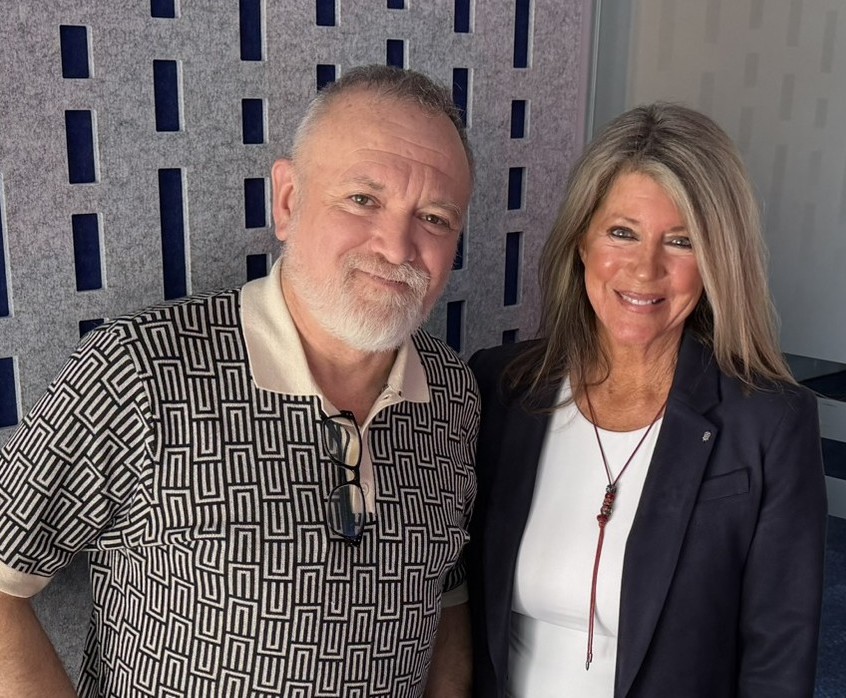
George Marks, Director of International Trade and Cultural Development for Lafayette Consolidated Government, joined Discover Lafayette to discuss his vision for connecting Lafayette to the world by building upon one of our region’s greatest assets: our culture.
George stepped into his new role in April 2026, but in many ways, he has been preparing for it for the past two decades. An artist and native of Arnaudville, George is the founder of NuNu Arts and Culture Collective, the remarkable cultural gathering place that helped demonstrate how art, music, language, food and simple human connection can breathe new life into a small community.
“I will tell you that I feel NuNu’s has been preparing me for this role for the past 20 years.”
From Arnaudville to LSU and Back Home
George grew up in Arnaudville and eventually attended LSU, where he initially planned to study business. An art professor saw things differently.
George recalled the professor asking what he was majoring in. When George answered “business,” the professor responded, “No, no, you need to switch.” He did.
After graduating from LSU in fine arts, George remained in Baton Rouge for approximately 15 years, building his career as an artist. He began selling his work while still in college and became associated with Anne Connelly Fine Art. He also spent three years working at LSU in programming, managing a frame shop, gallery and craft center, experience that in retrospect foreshadowed what he would later create in Arnaudville.
George describes his art as expressive, spontaneous and deeply influenced by his surroundings. Power lines, landscapes, cotton, family stories and the visual memories of rural Louisiana repeatedly find their way into his paintings.
When his father became ill, George returned home to Arnaudville. After his father died, George began recognizing just how much his hometown had shaped his artistic vocabulary.
“I realized that a lot of the symbols that were in my art were actually from Arnaudville.”
Creating a Place Where People Wanted to Be
Arnaudville was very different when George returned. He remembers approximately nine empty storefronts, a stark contrast to the thriving small town of his childhood.
George knew that if he was going to remain there, something needed to change. “We knew that we wanted to create a place that people would want to come, and where we wanted to live first.”
At the time, George didn’t know the term “creative placemaking.” He simply understood that art, activity and people could bring spaces back to life.
The community began programming events and activating vacant or underused buildings. One space became Tom’s Fiddle & Bow. Another eventually became a guest house. A space that would become The Little Big Cup was temporarily activated as an art gallery, in part to show what was possible and encourage others to invest in the community.
That philosophy ultimately grew into NuNu Arts and Culture Collective.
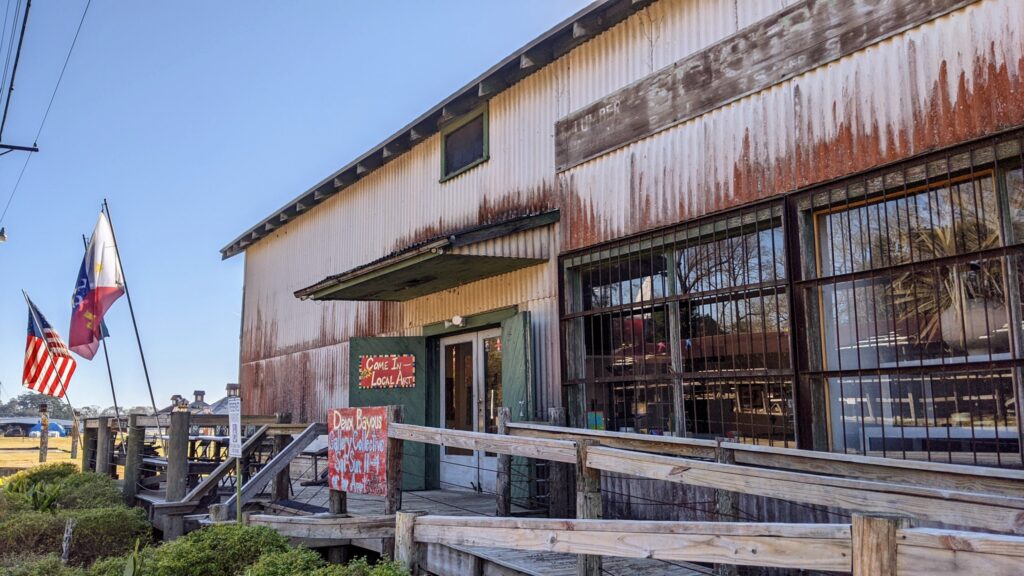
Today, NuNu’s occupies approximately 7,500 square feet in a former hardware store and lumberyard. It includes gallery spaces, a market, café, makerspace, technology studio and work areas for artists. George says the organization benefits from an extraordinary amount of volunteer support, with approximately $550,000 in volunteer value contributed annually.
NuNu’s has become much more than an art gallery. It is a place to gather, make things, exchange ideas, celebrate Louisiana French culture and welcome people from around the world.
And now George is bringing that philosophy to Lafayette.
“NuNu-fying” Lafayette
The Lafayette International Center was established in 1989 to connect Lafayette with international opportunities and relationships. George is building upon the trade and economic development foundation established under longtime director Philippe Gustin while greatly expanding the Center’s emphasis on culture and Lafayette’s creative economy.
George jokes that they are “NuNu-fying Lafayette.” But there is a serious economic development philosophy behind the phrase.
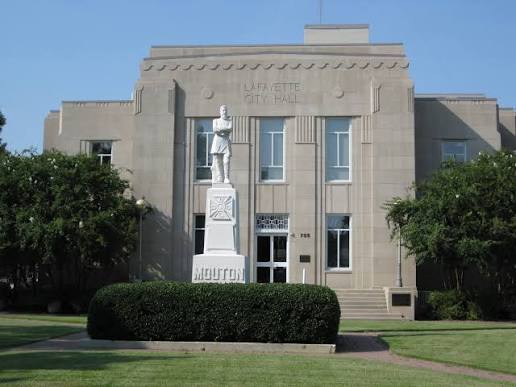
The International Center is being transformed into a place where people can learn, work, meet, collaborate and create. The first floor is envisioned as a public-facing convening space, something George describes almost as “everyone’s living room.”
“You can come in, grab a coffee across the street. Come and sit. Pull out your laptop, do some work within a space that displays original art, but also examples of some of the projects that we’ve worked on with some of our international partners.”
Alliance Française will become more visible within the building and expand access to its French library. A new Co-Lab space will provide desks to cultural nonprofit organizations, allowing groups to work in proximity to one another and share ideas, equipment, expertise and resources.
George calls it creating “positive tension” among organizations. “One might own a stage, another might own a PA, another one might have knowledge on how to build something. And so by pulling all these different groups into one space, we can hopefully collaborate more and utilize resources between each.”
The building’s upper floor is also being transformed into an innovation space, intentionally left somewhat raw so writers, artists, organizations and collaborators can gather, experiment and, as George puts it, “make a mess.”
Culture Is Economic Development
One of the most compelling parts of our conversation centered on George’s belief that culture and commerce should not be viewed as separate pursuits.
LCG funds the International Center, while the International Trade and Development Group supports initiatives government funding cannot cover. George also envisions additional support specifically focused on arts and culture.
“That way we have trade and economic development and then we have arts and culture on the other side. That intersection between the two is what helps to create community.”
French remains an important foundation for Lafayette’s international relationships, but George’s vision extends well beyond the Francophone world. The Center’s growing team brings knowledge of numerous languages and cultures and plans to develop relationships with cities and regions throughout the world.
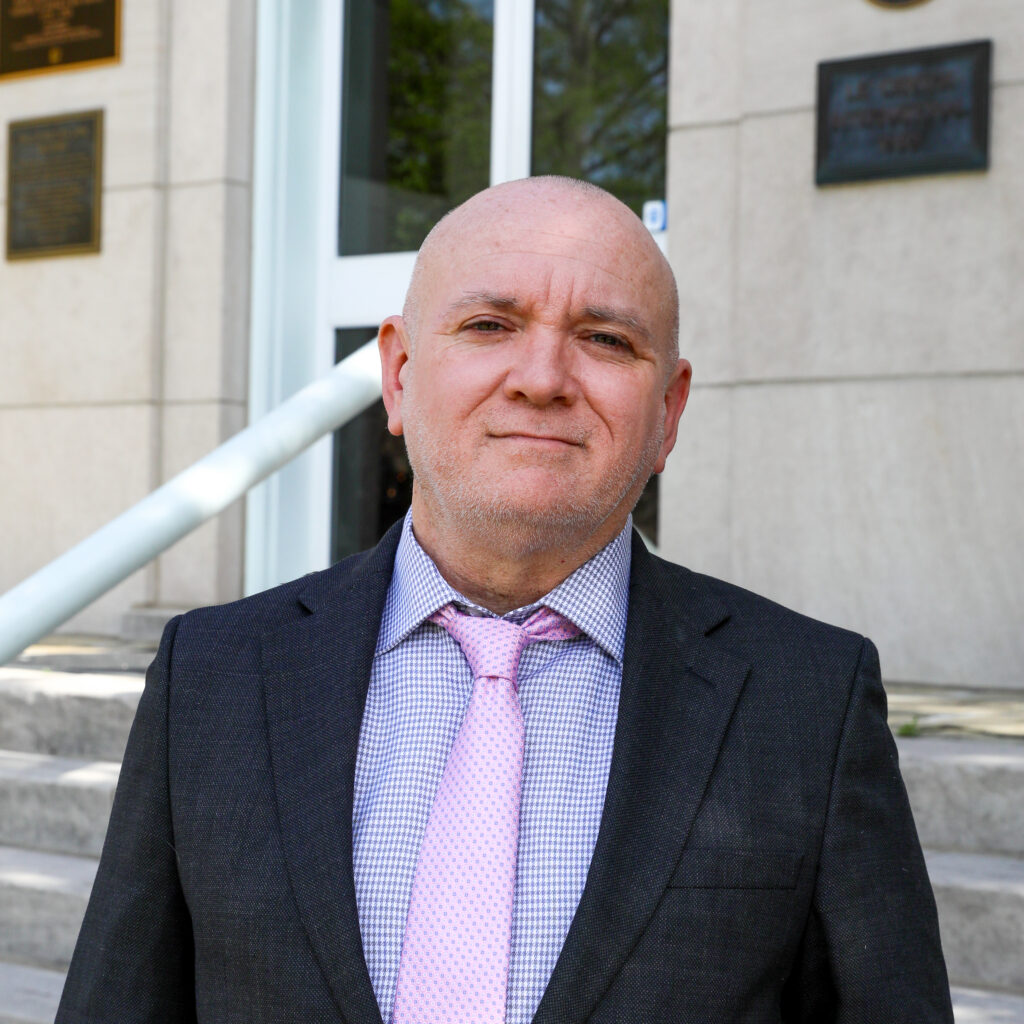
George Marks describes Lafayette as a “cultural gumbo,” shaped by generations of migration, some voluntary and some forced. Understanding those histories can help Lafayette intentionally reconnect with communities around the world.
“The cultural piece helps us to learn how to talk to one another. It teaches us how to celebrate with one another. It teaches us how to problem solve with one another.”
Those relationships can also make Lafayette more attractive to businesses and their employees. A company considering Lafayette is not simply looking at infrastructure and costs. People want to know what kind of community they and their families will be joining.
Making Lafayette’s Creative Talent Exportable
George also wants Lafayette to think differently about its artists, musicians, filmmakers, writers and other creative professionals.
Musicians have long traveled outside Louisiana to perform and earn income. George believes other creative professionals can follow that same model.
“We’re really looking at our creative industry, or our creatives, as something that is exportable.”
He pointed to internationally known Lafayette muralist Robert Dafford as an example of what is possible.
“We can be creating that pipeline of future Robert Daffords. We can create that pipeline of future musicians. We can create that pipeline of future creative placemakers.”
The Center hopes not only to identify opportunities for Lafayette creatives in other cities and countries, but also to provide the training necessary for them to take advantage of those opportunities and then bring their knowledge and experience home.
George and his team are also meeting with representatives of Lafayette’s music, film, visual arts and literary communities to identify common needs and avoid duplicating resources.
“We don’t want to duplicate services. We want to really identify what cultural and business assets already exist and then connect those.”
Public Art as Workforce Development
Public art has also moved under George’s department, opening another opportunity to connect creativity with economic and workforce development.
George says that means more than simply adding murals. His team is developing guidelines for public art and examining how sculpture, murals and other forms of creative placemaking can strengthen communities throughout Lafayette.
One particularly exciting initiative involves La Rochelle, France, and a proposed sister work to Bruce Krebs’ sculpture La Francophonie. The concept or model is expected to be introduced around Festival International, with the completed work anticipated in 2028.
George envisions the project as much more than the installation of a sculpture. By involving UL Lafayette, SLCC, potentially a local high school and area tradespeople, the project could teach participants how to work with materials such as aluminum and bronze.
Once the sculpture is complete, Lafayette will not simply have another work of public art. Ideally, it will have helped train another generation of people capable of creating large-scale public art themselves.
French Under the Kitchen Table
George did not grow up speaking French, but he certainly grew up hearing it. “I sat under the kitchen table and eavesdropped.”
His mother, who grew up in Cecilia, spoke Creole French. His father, who grew up in Arnaudville, spoke Cajun French. When the adults switched to French, young George knew they were probably discussing something the children weren’t supposed to hear.
Those memories of language, family and gathering continue to influence his artwork.
His mother has shared stories of picking cotton as a child and of the family sitting together cleaning and bundling green onions while telling stories and speaking French. George has incorporated those memories into his paintings, including a cotton series that connects places such as Grand Coteau, Arnaudville and Lafayette through lines and imagery.
“It’s those kinds of stories of connectivity and gathering that really, really inspired me.”
The Story Behind NuNu
Perhaps the most revealing moment of our conversation came when George explained the name “NuNu.”
NuNu was his father’s nickname.
His father was a boat captain who pushed barges through international waters and could be gone for one, two or even three months at a time. When he returned home, he didn’t particularly want to go anywhere. Instead, people came to him.
George remembers his parents making pot after pot of coffee as neighbors and friends moved through the house throughout the day.
His father also cooked in much the same way George paints. He might begin the morning with a broth. Vegetables from the garden or something brought by a neighbor would go into the pot. By lunchtime, the broth had become soup. After a trip to town and more visitors bearing ingredients, the soup might become a stew by dinner.
“It was like an evolution of the pot.”
And his father brought the wider world home with him. He returned from his travels with vinyl records, eight-tracks, VHS tapes and objects from the places he had visited. George experienced the world through those objects and through his father’s stories.
“The manifestation of NuNu’s was a result of that. The idea was to create an international stage within a small local rural community. And we did that.”
Now George sees Le Centre as an opportunity to do something similar on a much larger scale. “With Le Centre, we really want to create that international stage that allows for the local community to plug in and feel like they’re part of something bigger than themselves.”
A Five-Year Vision for Lafayette
When asked what he needs most right now, George’s answer was remarkably simple.
“My need right now is for people to be willing to gather and communicate more.”
In an era dominated by emails, texts, phones and computers, George believes we have lost some of the time once devoted to sitting together, talking and learning to understand one another.
His larger goal is to develop a five-year strategy for Lafayette’s international engagement, one informed not simply by business opportunities but by the people and cultures already living here.
“A lot of times we focus on purely the business piece or the economic piece. We forget that the cultural piece is something that is so important.”
That may be the best way to understand George Marks’ vision. International development does not begin solely with a trade mission or economic prospect. It can begin over a cup of coffee, through a painting, a French conversation, a musical performance, a shared meal or simply by getting people into the same room.
It is the same idea that shaped his childhood home in Arnaudville, inspired NuNu’s and now informs George Marks’ work for Lafayette.