Podcast: Play in new window | Download (Duration: 42:08 — 57.9MB)
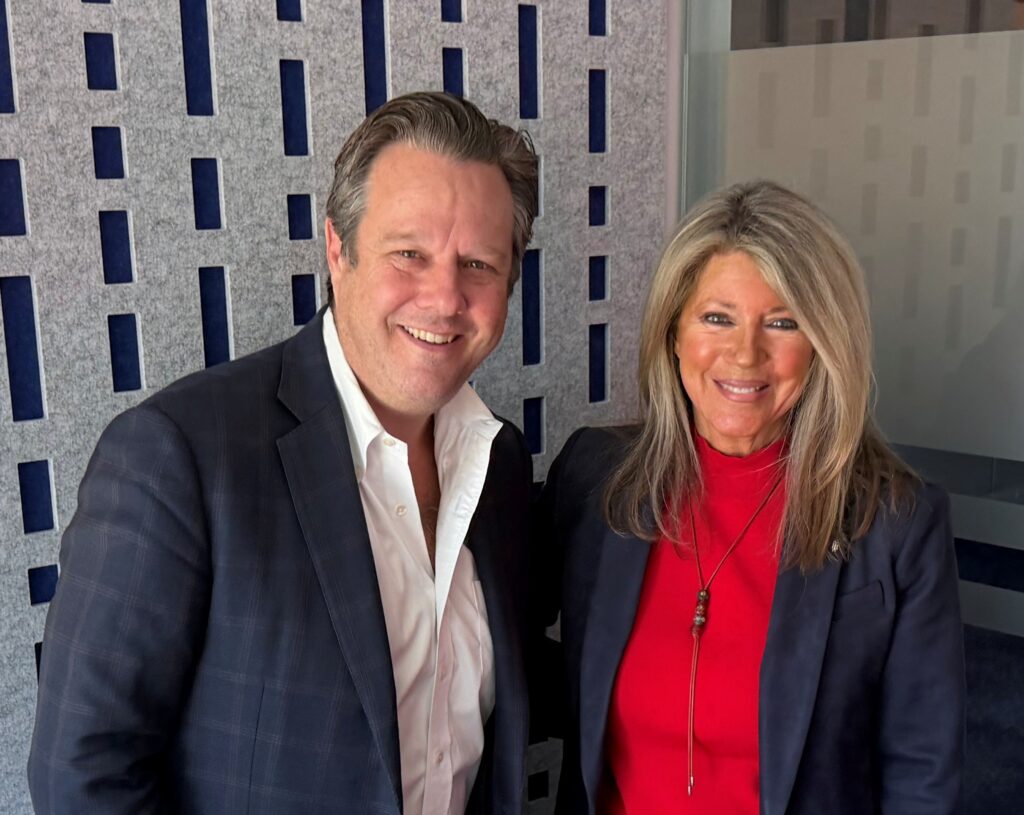
Robert Schacht has lived a life that bridges seemingly different worlds: Hollywood filmmaking, aerospace and defense manufacturing, international trade, and classical music. Today, as Chairman and CEO of Westfield Fluid Controls and Westfield Hydraulics, he is building a sophisticated manufacturing operation in Lafayette, Louisiana, while also serving as Chair of the Board of the Acadiana Symphony Orchestra.
Raised in Beverly Hills, California, Robert grew up surrounded by the entertainment industry. His grandfather was the legendary actor Ross Martin, best remembered for portraying the brilliant master of disguise Artemus Gordon in the 1960s television series The Wild Wild West. Robert followed his early interest in film to New York University’s Tisch School of the Arts, eventually working in the movie business before embarking on a dramatically different career in aerospace and defense.
What brought him to Lafayette, and what keeps him here, is a fascinating story of economic opportunity, cultural richness, family values, and the importance of building something that lasts.
Why Lafayette? A California Businessman Finds His Home in Acadiana
When Robert began considering relocating his manufacturing business from California, Louisiana wasn’t even on his list.
Manufacturing in California had become increasingly difficult, particularly for a business seeking to expand its capabilities and operations. Robert began evaluating locations across the country, including areas with established aerospace and defense industries.
A friend from Lake Charles, Gray Stream, encouraged him to consider Louisiana. That introduction led to meetings with economic development professionals, including Greg Gothreaux of Lafayette Economic Development Authority (LEDA).
Robert was impressed by the professionalism and transparency of Lafayette’s economic development leadership. Gothreaux understood what his company needed and was equally candid about the region’s limitations, particularly the absence of an established aerospace and defense manufacturing ecosystem.
But Lafayette had something else. “There was an energy here that was very different, unique,” Robert recalled.
After touring communities across Louisiana, two characteristics distinguished Lafayette: its early investment in fiber-optic infrastructure and its extraordinary cultural heritage. For someone operating a technology-intensive business, Lafayette’s commitment to fiber demonstrated forward thinking. Equally important was its rich tradition of music, art, and cultural engagement.
Robert explained that recruiting and retaining talented executives requires more than attractive business incentives. “You can’t recruit and retain executives without cultural development in parallel with economic development.” Lafayette offered both.
What began as a location that wasn’t even under consideration quickly became his first choice.
The move has also profoundly affected Robert’s family. He and his wife are raising their five children, including two still in school, and he values the kindness, courtesy, and genuine friendships they have experienced here.

“I have made more adult friends here than I ever would have imagined possible just because of the genuineness, the relationships. People are open.”
For Robert, Lafayette offers something increasingly difficult to find in larger metropolitan areas: a welcoming community where relationships matter and children can grow up with an appreciation for respect, responsibility, and humility.
Westfield: Precision Manufacturing for Aerospace, Defense, and Space Exploration
Robert’s companies, Westfield Fluid Controls and Westfield Hydraulics, design and manufacture sophisticated fluid-control components for aerospace, defense, and space applications.

These components may be relatively small, but their functions are critically important. Westfield manufactures solenoid valves, actuators, reservoirs, and other precision components that control hydraulic, fuel, and pneumatic systems in aircraft, missiles, military vehicles, and spacecraft.
The company produces approximately 2,000 different items, many consisting of 30 to 40 individual parts.
Its manufacturing requirements are extraordinarily precise. Robert explained that some components operate with metal-to-metal clearances of approximately 40 millionths of an inch, a tiny fraction of the width of a human hair.
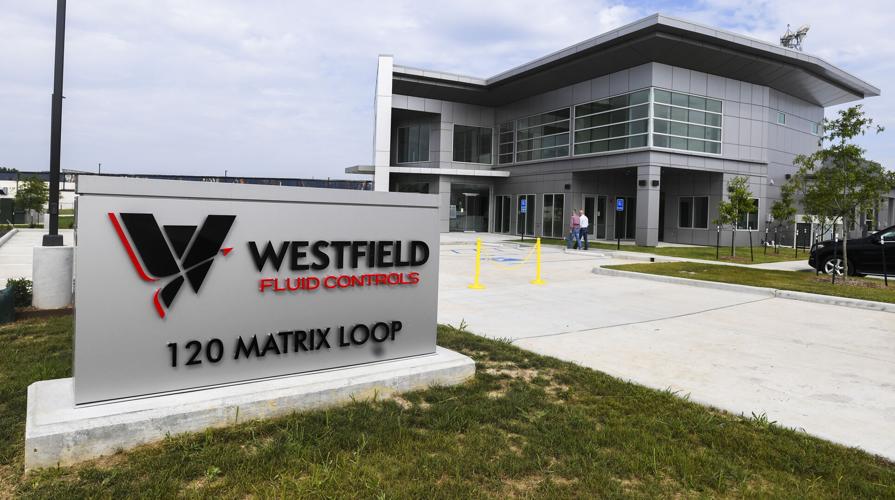
Westfield has built a new 30,000-square-foot facility in Lafayette and maintains approximately 20,000 square feet of operations in California. The company is developing parallel capabilities to ensure continuity of operations in the event of natural disasters or other disruptions.
Robert explained that certain Federal Aviation Administration certifications make maintaining a California presence necessary, at least for the foreseeable future.
At the time of our interview, Westfield employed 18 people in Lafayette and had committed to growing to 67 employees. Recruiting and training individuals capable of performing this highly specialized work is an ongoing priority.
The company is also involved in emerging technologies, including work with NASA on advanced valve systems and development of cryogenic valves for hydrogen applications.
Robert sees significant opportunities in the expanding commercial space industry. Westfield previously worked extensively with Blue Origin on the BE-4 engine, and he hopes the company will eventually work with SpaceX.
His vision extends beyond manufacturing individual components.
“I’m really focused on creating an enterprise in the engineering and manufacturing world that can be steered towards whatever is required. As the demands of the US industrial base change, we want to be there, we want to be able to pursue it and execute with excellence in everything that we’re doing.”
Rebuilding America’s Manufacturing Capabilities
One of the most compelling parts of our conversation concerned Robert’s perspective on the decline of American manufacturing expertise. Having worked in aerospace and defense for more than two decades, he has witnessed significant consolidation among manufacturers of specialized components.
He expressed concern that acquisitions driven by short-term financial objectives have sometimes resulted in the loss of valuable technical knowledge and institutional expertise.
“The aerospace industry has changed a lot and unfortunately not for the better.” Robert believes that preserving engineering knowledge and manufacturing capabilities is essential to America’s economic competitiveness and national security. He also discussed the challenges of developing a sufficient pipeline of engineers and highly skilled technical workers, particularly in industries subject to stringent national security regulations.
For Westfield, the objective is not simply to expand production. It is to build a sustainable enterprise with the expertise, people, and resources necessary to serve customers over the long term.
Robert emphasized that the company’s success depends on its employees and their personal and professional well-being. “We realized that the success of the company is predicated on the success of everybody who’s actually working for us.” He views Westfield’s presence in Lafayette as an opportunity to contribute to something larger than the manufacture of aerospace components.
International Trade, Export Controls, and National Security
Robert brings extensive experience in international trade policy, having served on the President’s Export Council Subcommittee on Export Administration from 2010 to 2016.
Our discussion explored the delicate balance between promoting American exports and protecting sensitive technologies. Robert believes exporting American products and services is essential, but cautions against allowing the transfer of critical engineering and manufacturing knowledge to countries whose interests may conflict with those of the United States.
He explained that manufacturing and engineering are closely connected. When production moves overseas, valuable engineering capabilities and opportunities for innovation may follow.
His work on the export council coincided with efforts to reform export controls, distinguishing technologies requiring the highest levels of protection from those that could be exported under less restrictive regulations.
He also discussed the challenges tariffs create for domestic manufacturers. Although Westfield is required to prioritize domestic sourcing under applicable defense procurement rules, some raw materials must still be obtained internationally. Increased tariffs have added costs to its operations.
Throughout our discussion, Robert returned to the importance of protecting America’s technological capabilities while maintaining a competitive industrial base.
From NYU’s Tisch School of the Arts to Aerospace Leadership
Robert’s path into aerospace manufacturing was anything but conventional. He earned a Bachelor of Fine Arts in film from NYU’s Tisch School of the Arts and initially pursued a career in the entertainment industry. He later studied at MIT to develop his ability to lead technology organizations.
Interestingly, Robert credits his experience in film production with teaching him skills that remain valuable in manufacturing. On a movie set, time is limited, equipment and personnel must be coordinated, and changing conditions require immediate decisions. He found that this fast-paced environment offered lessons in organization, problem-solving, and operational execution.
His filmmaking career included serving as associate producer of Across the Tracks, an early Brad Pitt film also starring Ricky Schroder and Carrie Snodgress. Robert worked on the low-budget production with producer Chip Rosenbloom and director Sandy Tung while he was still in school.
He remembers the experience fondly, particularly working with Brad Pitt before his breakthrough role in Thelma & Louise. Robert recalled recognizing Pitt’s extraordinary screen presence during casting. “There’s just a charisma. He had that kind of special quality, something that’s hard to find, but easy to recognize.”
Although Robert ultimately left filmmaking for a career he felt could have a different kind of impact, his appreciation for cinema has never diminished.
He remains an enthusiastic movie buff, with a particular love for classics such as Casablanca, the work of Cary Grant, and more recent films including Christopher Nolan’s Oppenheimer, which he praised for its extraordinary narrative structure.
Growing Up with Ross Martin of The Wild Wild West
One of the most delightful parts of our conversation was hearing Robert describe his grandfather, Ross Martin.
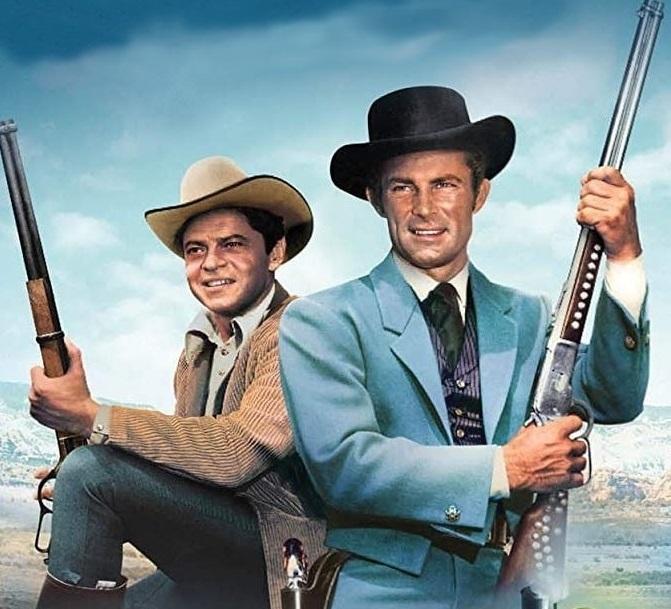
Television audiences remember Martin as Artemus Gordon, the resourceful Secret Service agent and master of disguise who starred alongside Robert Conrad’s James West in The Wild Wild West. But Martin’s talents extended far beyond acting.
He was a concert violinist, painter, multilingual performer, and highly educated man whose intellectual curiosity and artistic abilities made a lasting impression on his grandson.
Robert grew up in a remarkable environment, surrounded by people whose names were familiar to television and movie audiences. His grandfather was close friends with Lucille Ball, and Robert remembers spending time at her home and watching accomplished entertainers respond to Martin’s humor and intelligence.
“He was just an exceptional human being.”
Martin’s extraordinary versatility was especially apparent in The Wild Wild West. He created an astonishing range of characters through elaborate disguises, accents, and mannerisms.
Robert shared a wonderful behind-the-scenes detail: his grandfather designed and applied his own makeup and even sketched the characters he intended to portray in the margins of his scripts.
Born in Grodek, a community whose national boundaries shifted between Poland and Ukraine, Martin immigrated to New York in 1920. He grew up on the Lower East Side, worked in radio, and eventually moved to California.
Robert credits his grandfather with establishing an exceptionally high standard for intellectual curiosity, creativity, and personal accomplishment. “He set the bar very high for me as to what a person of that caliber could be and how I should set the course of my life.”
Perhaps his grandfather’s most enduring influence, however, came through music.
Bringing the Acadiana Symphony Orchestra Back to Full Strength
Today, Robert serves as Chair of the Board of the Acadiana Symphony Orchestra, where he is deeply involved in rebuilding the organization’s artistic reach and strengthening its place in the community.
He explained that the pandemic and subsequent financial pressures had forced the symphony to reduce the number of musicians performing onstage, diminishing the full orchestral experience.
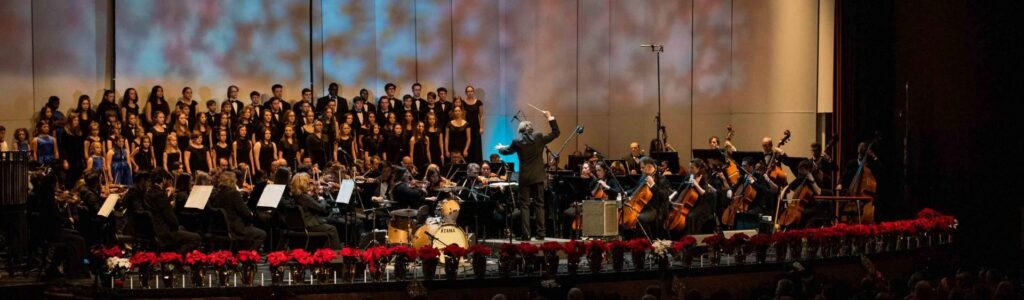
When he joined the board, one of the central questions was how to rebuild the audience by first restoring the quality and scale of performances.
Through a collaboration with the Louisiana Philharmonic Orchestra and conductor Matthew Kraemer, who subsequently became the Acadiana Symphony’s music director, the organization has expanded its artistic possibilities.
Robert described performances featuring approximately 65 musicians, larger choral productions, and collaborations with other performing arts organizations. These partnerships include providing orchestral accompaniment for ballet productions such as The Nutcracker, participating in The Creole Nutcracker, and plans for a production of Les Misérables with local theater partners.
Among the projects Robert is especially excited about is The Cajun Night Before Christmas, an original holiday collaboration featuring the Lost Bayou Ramblers. The symphony commissioned Grammy Award-winning composer Jay Weigel to create an original work, with Louis Michot providing narration and fiddle. Robert hopes the production will become a beloved new holiday tradition for Lafayette and Acadiana.

The organization is also exploring music competitions and the development of an opera.
For Robert, the symphony should be a central part of a vibrant regional performing arts community, collaborating with other organizations rather than operating in isolation.
Why Music Education Matters More Than Ever
Robert’s commitment to the symphony is deeply personal.
When he was eight years old, his grandfather placed a violin in his hands and introduced him to the discipline and beauty of music.
That experience shaped his intellectual and emotional development and helped establish his lifelong appreciation for the arts.
Robert believes music education is particularly important in an age increasingly dominated by digital devices, artificial intelligence, and instant gratification.
The symphony’s educational efforts include an after-school strings program with Lafayette Parish public schools and opportunities for free music lessons.
He spoke passionately about the patience, perseverance, and satisfaction that come from learning to play an instrument, qualities that can be difficult to develop in a world of constant digital stimulation.
But music offers something even more fundamental: human connection.
Robert described the transformative experience of hearing live musicians perform together, sharing emotion in a way that cannot be replicated through a screen.
He wants to make classical music accessible and welcoming to everyone, including families with young children who may never have attended an orchestral performance.
He also sees opportunities to connect classical traditions with the music audiences already know and love, including jazz, zydeco, folk music, and contemporary film scores.
Robert expressed a particularly moving thought about the arts and their role in our lives:
“I grew up in a household where, you know, everybody sort of understood that life can be soul crushing and the arts are where we actually realize that we have a soul.”
He believes the opportunity to experience music can change the trajectory of a young person’s life, even if that opportunity reaches only one child.
“It’s not a numbers game per se. It’s, you know, how do we reach that one child whose life is completely transformed and then has the butterfly effect on everybody else?”
He remembers how music connected him to his grandfather across generations, regardless of their differing perspectives on politics, philosophy, or other subjects.
For Robert, music offers a universal language capable of bringing people together.
Artificial Intelligence and the Future of Manufacturing
We also discussed the role artificial intelligence is beginning to play in Westfield’s operations.
Robert explained that AI is already being used in engineering, computer numerical control (CNC) machining processes, and quality management.
In a highly regulated industry, manufacturing requires extensive documentation, auditing, performance monitoring, and compliance procedures.
“We’re in the document business as much as we are in the manufacturing business.”
AI is helping Westfield manage these responsibilities more efficiently, while also supporting engineering and production activities.
Robert expects automation and robotics to become increasingly important, although Westfield’s highly specialized, low-volume production presents challenges that differ from traditional mass manufacturing.
He believes these technologies will fundamentally change how organizations operate, including the roles of management and the processes connecting planning with execution.
Building a Business, Supporting the Arts, and Investing in Lafayette
Robert Schacht’s story illustrates how a seemingly unconventional career can bring together experiences that ultimately reinforce one another.
His early exposure to music and film helped develop his creativity and appreciation for storytelling. His experience in filmmaking taught him operational discipline. His work in aerospace and defense has given him a deep understanding of precision manufacturing, engineering, and national security.
And his decision to move to Lafayette has given him an opportunity to combine his professional ambitions with a personal commitment to community and cultural development.
When he isn’t working, Robert enjoys reading, golf, tennis, and skiing. But much of his energy is devoted to building Westfield into an enduring manufacturing enterprise and helping the Acadiana Symphony Orchestra reach new audiences.
What stands out about Robert is his belief that economic development and cultural development belong together. A thriving community needs meaningful employment, technological innovation, strong families, educational opportunities, and a vibrant arts community.
His journey from Beverly Hills to Lafayette reminds us that the qualities making Acadiana special are not always the things we measure in economic reports. They are also found in our relationships, our generosity, our cultural traditions, and our willingness to welcome people who choose to build their lives here.
We thank Robert Schacht for joining us on Discover Lafayette and for sharing his remarkable journey, his commitment to American manufacturing, and his passion for making the arts accessible to future generations.