Podcast: Play in new window | Download (Duration: 34:58 — 48.0MB)
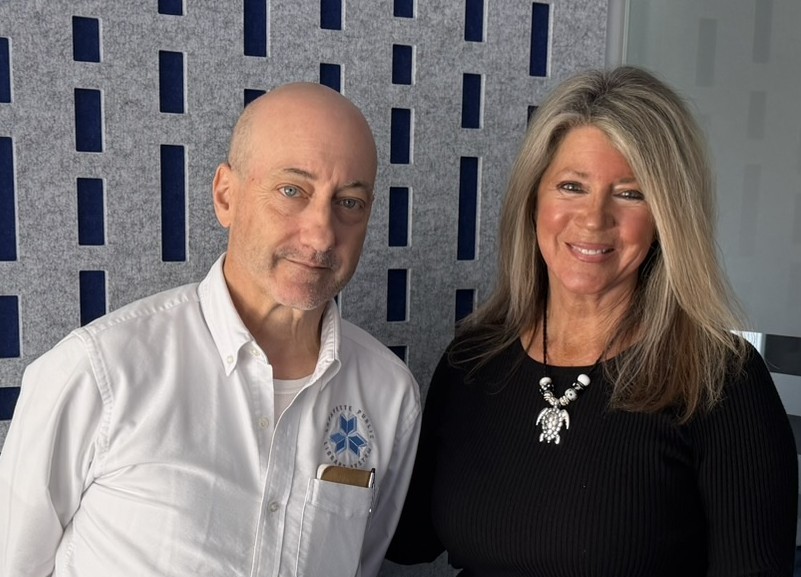
Danny Gillane, Director of the Lafayette Public Library System, joins Discover Lafayette for a timely conversation about the evolving role of our parish libraries and the tax renewal on the ballot Saturday, May 16, 2026.
Gillane has served Lafayette’s library system for nearly two decades, following earlier work with public and academic libraries including UL-Lafayette and the Louisiana State Library. He earned a master’s degree in library science from Louisiana State University.
Serving Lafayette Parish through nine branches, the system has grown steadily over the past two decades, with major regional libraries in Carencro, Youngsville, Scott, and Lafayette, alongside smaller satellite locations embedded in community centers. Gillane emphasizes that the system’s mission extends far beyond books and is a community asset offering a treasure trove of resources. “The whole community pays for the library. So we are a shared resource,” he explains. “There’s no money transaction when you walk through the door.”

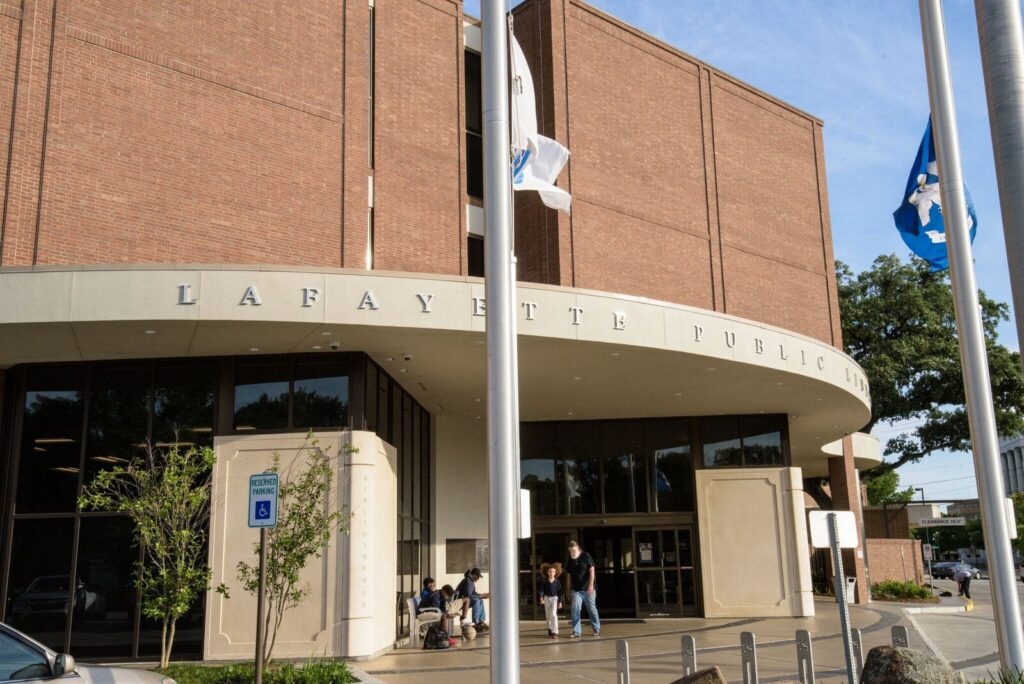


That shared investment delivers a remarkable range of services. In addition to physical and digital books, including downloadable audiobooks comparable to commercial platforms, the library offers free access to meeting rooms, study spaces, and technology resources. In 2025 alone, “over 35,000 people booked a study room or a meeting room,” and the library system hosted more than “3,800 programs with over 80,000 attendees.”

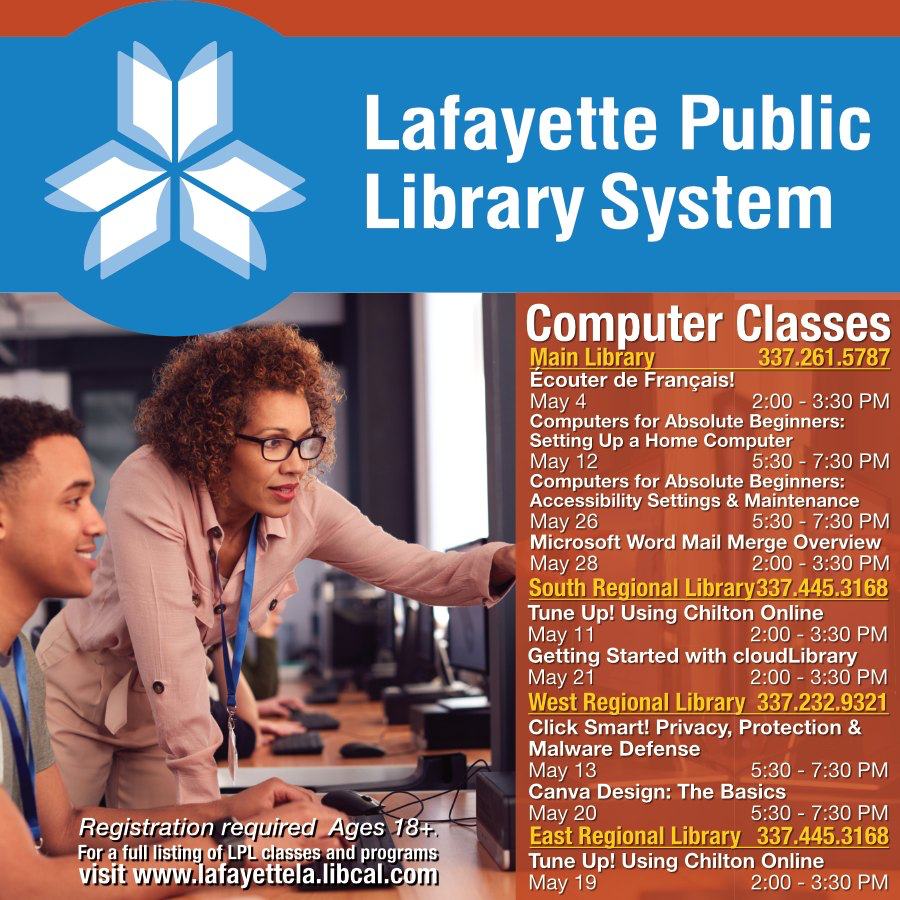
Programming spans all ages and interests: technology training, genealogy research, makerspaces with 3D printers and laser cutters, and even recreational offerings like Zumba and mahjong. Library members can also check out musical instruments such as violins, guitars, and accordions for 30 days, providing families a low-risk way to explore new interests. “Before you know if it’s going to stick,” Gillane notes, “let’s check this out.”
One of the library’s most popular and lesser-known benefits is free access to local cultural institutions. With a library card, patrons can reserve passes to destinations such as the Hilliard Art Museum, Vermilionville, Alexandre Mouton House/Lafayette Museum, Lafayette Science Museum and the Children’s Museum, with admission covering an entire household. The system has also recently partnered to provide free parking access at Moncus Park. Additional llibrary membership resources include online access to training and test prep courses such as Udemy, Mometrix Test Preparation, LinkedIn Learning, and Learning Express Library.
Gillane describes the library as an essential “third space” in the community: “It’s a good space for people to come together. There’s no discriminating who comes in, no judging. Check out what we have, book a room, hang out.”
This community-centered mission is directly tied to the upcoming May 16, 2026 ballot, where voters will consider renewal of a 3.12 mill property tax that funds approximately 65% of the library’s operating revenue. If approved, the renewal would extend funding for ten years beginning in 2027. The tax generates about $8.89 million a year for operation and maintenance of buildings and services and for personnel
“It pays for the operation of the library, maintenance of the buildings, any capital improvements, everything is encompassed in these two taxes,” Gillane explains, referencing the system’s two dedicated millages. He stresses the importance of voter awareness: “We are at the bottom of the ballot, so keep going.”
The stakes are significant. The library system operates on an annual budget of just over $14 million and has recently moved from a $1 million deficit in 2021 to a more stable financial position through cost-cutting and increased tax revenues. That stability is now enabling long-delayed projects, including major renovations to the South Regional Library, expansion of the North Regional Library in Carencro, and plans for a new Northeast Regional Library near the Holy Rosary site which is anticipated to open around early 2028.
Gillane underscores that community input remains vital to the system’s future. “If you ever go in the library and there is something you wish we had, please reach out. We don’t hear from enough people, and we want to be there for everyone in our community.”
For those who haven’t visited recently, his message is simple: “Please come in. We’d love to see you. There’s plenty to see.”
As Lafayette Parish prepares for the May 16 vote, this conversation offers a clear reminder that the public library is not just a place for books—it is a dynamic, community-funded resource that continues to evolve with the needs of Acadiana.