Podcast: Play in new window | Download (Duration: 1:02:58 — 86.5MB)
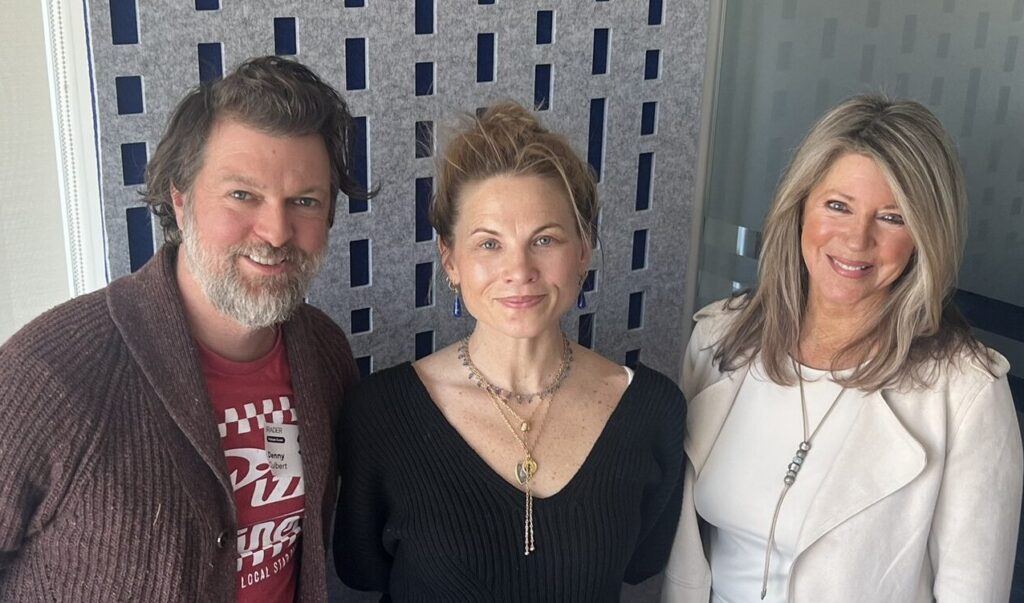
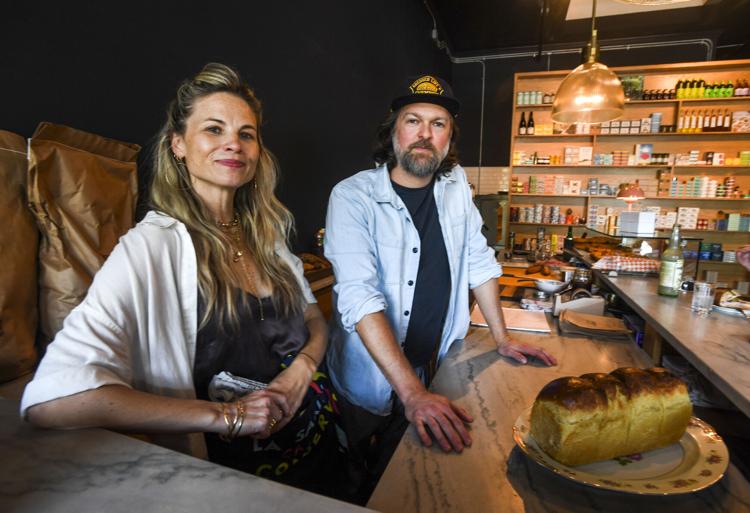
Wild Child Wines is one of those rare downtown spots that feels instantly like a neighborhood living room—warm, inviting, and full of discovery. In this episode of Discover Lafayette, we sit down with Katie and Denny Culbert, the couple behind Lafayette’s signature natural wine shop and wine bar, to talk about how Wild Child began, how it grew, and why it’s become a destination for locals and visitors alike. Along the way, we also explore their other creative ventures—Katie’s long-running boutique, Kiki, and Denny’s career as a professional photographer whose work has taken him deep into food, place, and storytelling.
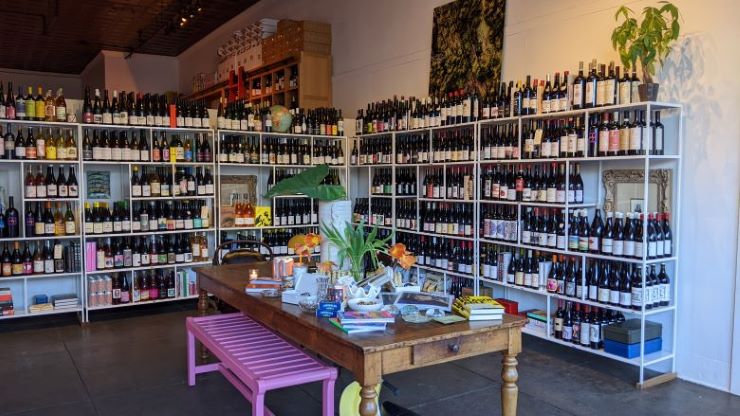
Their vision and dedication to hospitality and curated wine culture earned Wild Child Wines a 2026 James Beard Award semifinalist nomination in the Outstanding Bar category, one of the highest honors in the American culinary and beverage world. This is really a major moment for Lafayette’s food and drink scene.
Katie and Denny’s story starts, fittingly, in Lafayette’s community orbit. Denny was photographing an event for the newspaper. “It happened to be Palates and Pate. A big fundraiser,”when their paths crossed. Katie remembers she was in her late 20s, and after a mutual friend introduced them, they “found the same friend group at the same time.” Denny wasn’t from Lafayette originally; he moved to South Louisiana for journalism, explaining, “I grew up in northeastern Ohio, but I moved to Baton Rouge in 2008 to intern for the Advocate” before landing a job at The Daily Advertiser. Working for the paper, he says, became the fastest way to understand Acadiana: “I’ve been to every single high school gymnasium, every festival, every school board meeting.” He even created a column called Dishing It Out, where he’d spend time inside local restaurants and build photo essays from the same set of questions he asked each owner, every time.
Katie’s background is equally rooted in local business and community. She has spent years helping operate Kiki, the boutique founded by her mother, Kiki Frayard, and describes how she stepped in to help make the business viable beyond its early stage: “Not so much with the creative side of it, more with the bookkeeping, looking at numbers and keep making it a viable business.” That blend: Katie’s retail and business instincts and Denny’s creative storytelling, formed a foundation for what became Wild Child Wines.
Runaway Dish – “Their former life”
“We used to have a magazine when we were doing Runaway Dish, a physical magazine that went along with each dinner. We’d do a chef interview and then farmer interviews for all the products that we were using. That also influenced Wild Child Wines, being in that world. It’s definitely how we ended up here because we met so many chefs. Denny was photographing chefs in their kitchens for the paper. And then beyond that, chefs really didn’t know one another. There was not a tight knit chef community. The goal was to bridge that and start these dinners where we’d get two chefs together, they come up with a menu, we pay for everything, and then any sous chefs could come and hang out and help, or just watch. It brought all these cool gangs of people together that we didn’t really know and they didn’t know each other. We’d get together every few months.”


The idea for Wild Child Wines grew out of lived experience, not a business plan on paper. The couple traveled frequently for work, ate in great restaurants, met chefs, and kept discovering wines that simply weren’t available in Lafayette. Katie describes how a shift happened while traveling: “It changed my thinking and perspective on what wine was and could be. It opened my eyes.” She remembers thinking, “Instead of driving to New Orleans and getting cases of wine every time we go, maybe we could just open a tiny wine shop.” They already had a downtown space; Denny had been renting it since 2016 as studio and workspace, so the “tiny wine shop” idea became real.

Wild Child Wines opened in January 2020, just weeks before the world changed. “Right before Covid,” they say, an unexpected test for any new business. But their concept proved resilient. “Everyone still needed wine,” Katie says, and the shop pivoted fast. “We made a website overnight,” they recalled, creating pickup windows where they’d be “boxing wine, drinking wine, handing wine to people.” Looking back, they describe it as a strange but workable season: “For us personally, it was okay… the right concept.”
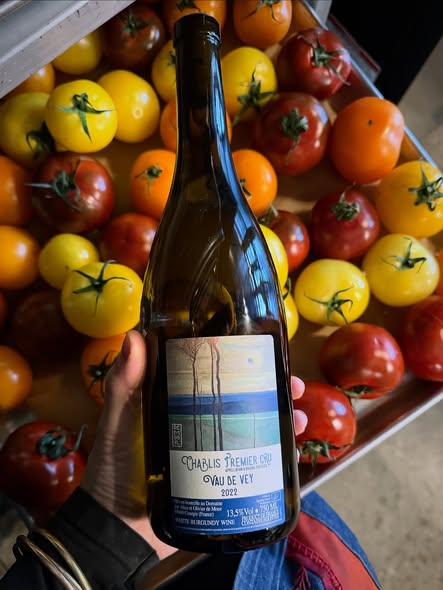
A big part of the Wild Child experience is how they talk about wine, without intimidation, and with a deep respect for where it comes from. Katie explains that wine is, at its core, agriculture: “Wine is an agricultural product. It’s grapes.” Over time, she says, wine became commercialized and manipulated: “When you look at what wine has become, it’s become this process where lots of things are added to preserve it” For them, the appeal of low-intervention or “natural” wine is both philosophical and physical. “It should just be grapes,” she says, and she describes the feeling of these wines as having “a liveliness.” Denny offers a simple comparison: “Think of it more as like the farmers market of wine, rather than this mass produced grocery store wine.” They focus on small producers, sometimes only “300 to 600 cases of wine a year”, and still marvel that a tiny shop in Lafayette can receive a case from a winemaker in Umbria, Italy: “That’s incredible.”
Inside the shop, the goal is to help people try and learn in real time. They rotate “6 to 8 wines by the glass,” and if something is open, they’re generous with tastes: “We’ll give you a taste, as much as you want.” Customers can shop with a glass in hand, explore without pressure, and let curiosity lead. Katie laughs that they still see themselves as learners: “We’re wine babies too. I still don’t know a lot about wine,” Katie says. Yet the shop’s culture and hospitality, powered by a staff they praise repeatedly, creates a place where people want to linger, meet, and return.
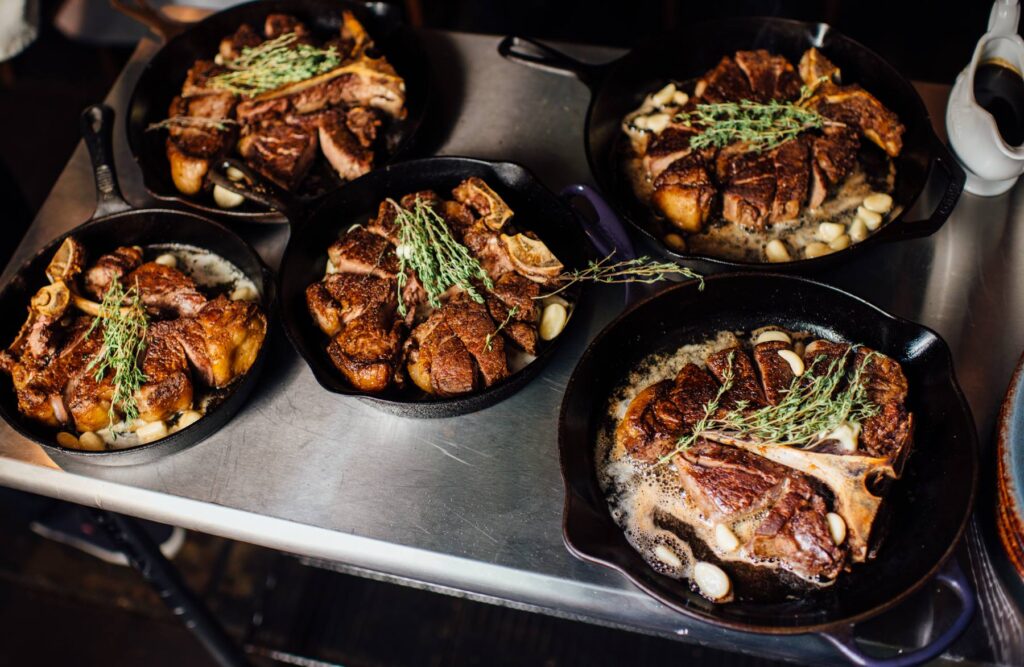
Over time, Wild Child also expanded through food, always in service of the wine, but now very much part of the experience. Katie admits the shop was originally meant to be only “a tiny wine shop with a little tasting bar, 600 square feet,” but after lockdown, food grew naturally. She began working on pizza recipes during lockdown, hosting backyard pizza parties, then bringing that idea to the shop as a low-barrier entry point: “The barrier to entry for pizza is much lower than this new wine that they haven’t seen.” She describes the strategy plainly: “Everything that we’ve added is just to get more people in the door to sell more wine. That’s the goal.” Today, Wild Child offers a popular Friday lunch, making bread in-house and building a menu around sandwiches, salads, and “snacks”—including tinned fish, olives, and small plates.


Food, for them, is also about local connection. Katie talks about sourcing flour from a local mill—“the flour we’re getting is milled right down the road at Straw Cove”—and finding produce at markets: “I’ll go to Moncus Park mostly…” Their approach mirrors their wine philosophy: ingredients matter, and good inputs create good outcomes. “It goes back to the wine,” Denny says, emphasizing that they want products that are “clean” and made with care.
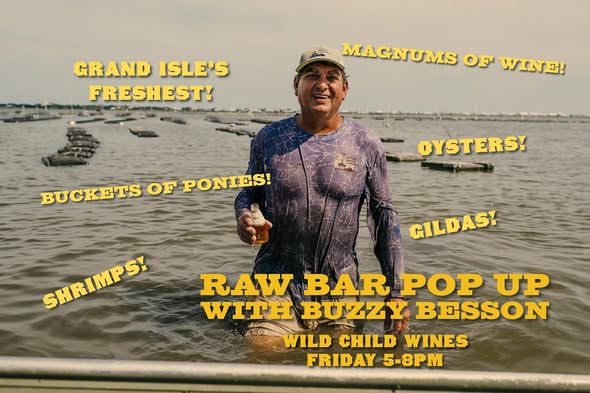
Seafood is another growing part of the Wild Child story, especially oysters. They highlight a favorite oyster farmer: “Albert “Buzzy” Besson, Grand Isle native… he’s now farming oysters there.” Besson delivers directly to the shop every Thursday, and the relationship embodies what they love about downtown: small-business networks, familiar faces, and a Main Street feeling. They describe field trips with other downtown restaurants to learn oyster farming firsthand and reflect on the changing coastal reality that is shaping new oyster traditions.
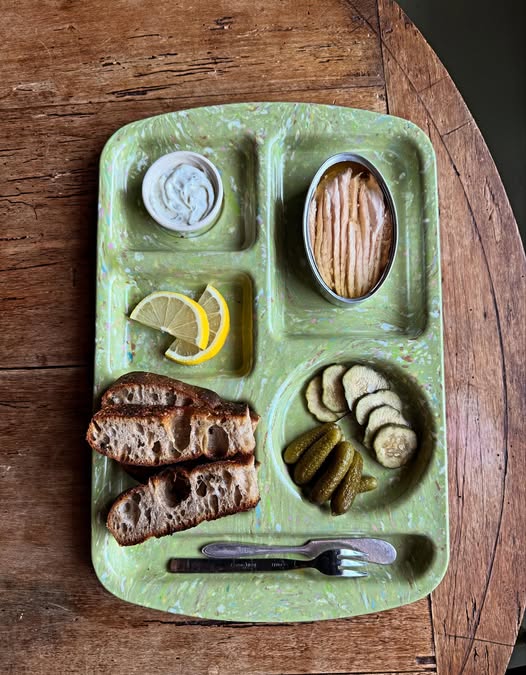
One of the most delightful segments of the interview is their passion for tinned fish, which has become a signature part of the shop’s identity. Katie traces her “aha moment” to a Grand Canyon trip where canned smoked oysters became the perfect camp appetizer: “We’re just on a sandy beach in the middle of the Grand Canyon eating smoked oysters out of a can.” What started as a personal love turned into a curated selection that grew so big it demanded its own wall, “floor to ceiling tin fish.” They’ll even plate it for guests with pickles and fresh bread: “If you come in, we’ll do tinned fish plate and set it up for you.” They love that it bridges cultures too—both the adventurous foodie and “the guy who’s been eating sardines in the duck blinds” can appreciate it.
The episode also includes a meaningful reflection on Lafayette hospitality, prompted by the recent passing of Charlie Goodson of Charlie G’s. Katie describes growing up around Charlie G’s and remembers him as “such a mentor for so many people.” They recount seeing him in recent years, coming in for lunch and wine at Wild Child Wines with his wife. and how much it meant that he supported what they were building: “We felt like we were doing something right… knowing that he loved the place and supported it.” For them, Charlie’s example is part of the inspiration behind the kind of welcome they want to offer.
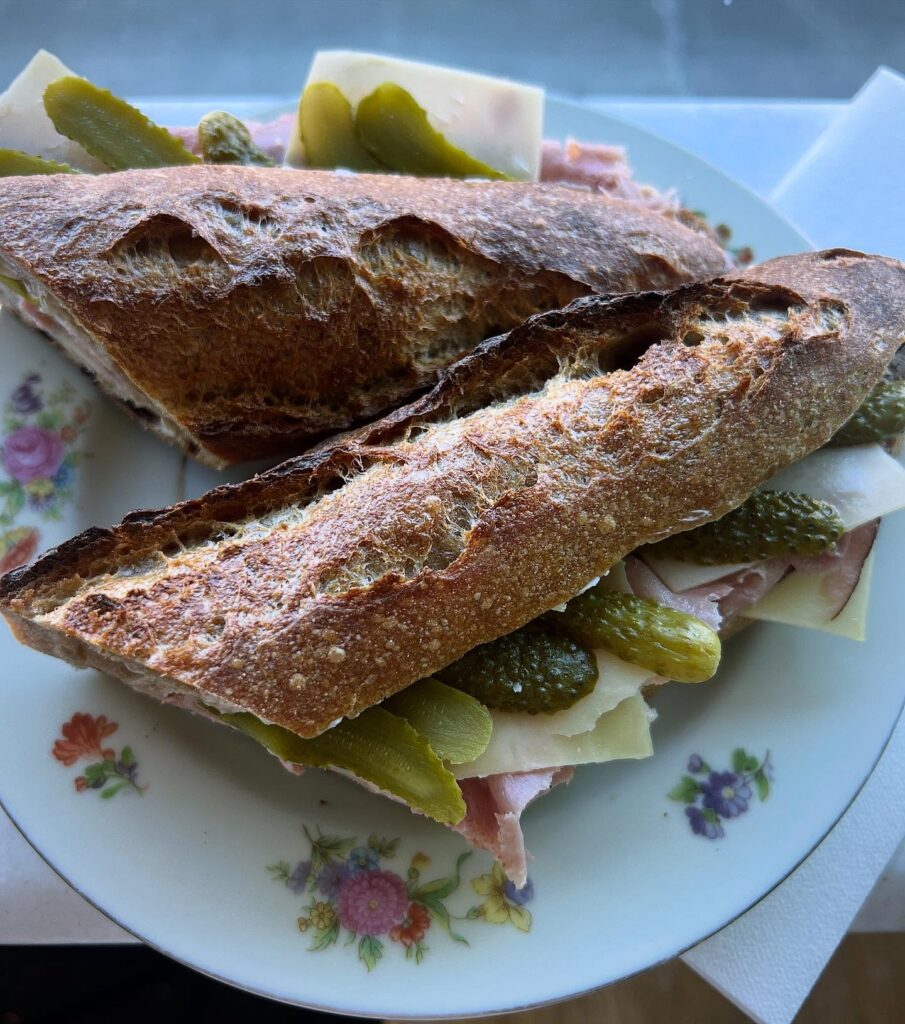
We close with practical details, such as where to find them and when to visit, and a brief, fun photography “nerd-out” with Denny. He shares his camera choice (a Nikon Z9), his photojournalism background at Ohio University, and a simple tip that applies to everyone, even iPhone shooters: “Not mixing light sources… if you’ve got a big window… turn off all the other lights in the room and use that.” The conversation ends with a glimpse into their personal lives and how their passions have become their work. As Katie puts it with a laugh, “Our hobby is the wine shop. It’s our house.”
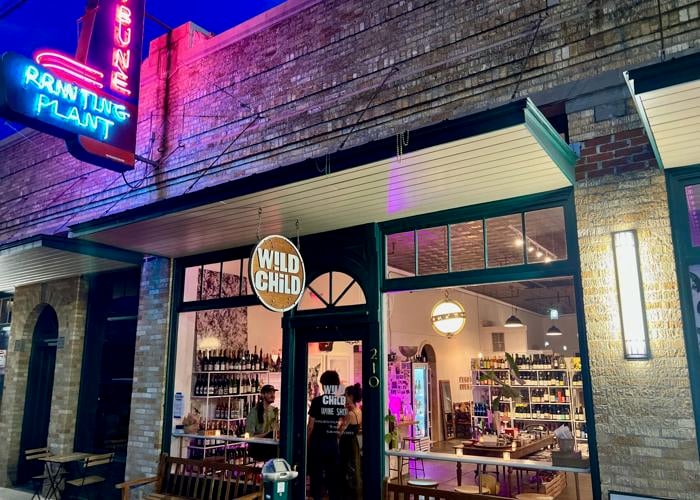
Wild Child Wines is located at 210 Vermilion Street, directly across from Parc Sans Souci. Their hours: Tuesday–Thursday, noon–8 PM, and Friday–Saturday, 11 AM–9 PM. Visit https://wildchildwines.com/ for more information.