
Podcast: Play in new window | Download (Duration: 51:56 — 71.3MB)
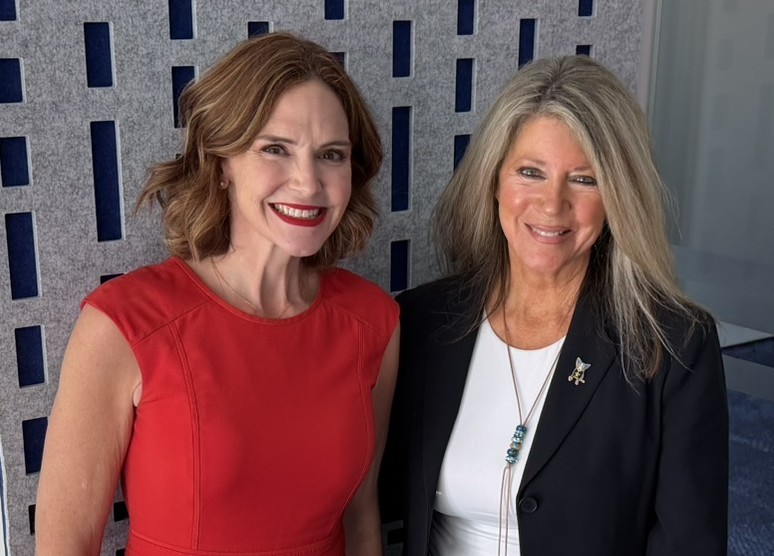
Discover Lafayette welcomes Katie Ferguson, whose remarkable story is one of resilience, advocacy, and choosing purpose in the face of life’s most unexpected challenges.
A Lafayette native, communications professional, and passionate community advocate, Katie has lived through two extraordinary journeys. First, she became the long term caregiver for an Army veteran whose life changed forever after a catastrophic spinal cord injury. Years later, while feeling completely healthy, a free heart screening uncovered a life threatening ascending aortic aneurysm caused by an undiagnosed congenital heart defect, leading to open heart surgery that ultimately saved her life.
Katie approaches both experiences with remarkable clarity and compassion. As she explains, “Nothing happens without having purpose. When something happens to me, chances are it’s happening to someone else. And if I can shine a light on what they’re going through, if I’m able to help ease anyone’s journey, it’s worth it.”
That philosophy has shaped her work as an Elizabeth Dole Foundation Fellow, where she advocates for military and veteran caregivers across the country, and as a spokesperson for heart health awareness through the American Heart Association’s Go Red for Women initiative.
Katie’s caregiving journey began in 2010 under circumstances she never could have imagined. She and Army officer Barry were casually dating and, by her own admission, were “kind of looking like we were going to break up” as he prepared to retire from military service and move overseas to launch a business. The day after signing his retirement paperwork, Barry suffered a devastating spinal cord injury after slipping from a rope swing into a sandbank, shattering his cervical spine and becoming immediately quadriplegic. Katie recalls receiving a call from a mutual friend before joining his family in the intensive care unit, beginning what she describes as “many, many waits in ICU rooms and hospital rooms and not knowing.”
Rather than walking away from an uncertain future, Katie leaned in. “I loved him,” she says simply. As Barry progressed through months of rehabilitation in New Orleans, Lafayette, and Atlanta, the two began dating in earnest while he was still hospitalized. They eventually married, allowing Katie to become his full time paid caregiver after leaving her successful public relations career. “I gave up my career because this was much more important. This was all encompassing.”
Her description of caregiving offers a rare, honest glimpse into the invisible work performed by millions of family caregivers every day. “You are literally trying to plan two steps ahead,” she explains, describing everything from helping with showers and medications to waking every three or four hours throughout the night to reposition Barry and prevent pressure sores. While the physical demands were immense, Katie says the mental burden proved even greater. “You don’t think about it when you’re going through it. You’re trying to survive. This is the hand you’re dealt, and you don’t have a choice in the matter. You put your head down and you make it work.”
One of the most compelling parts of Katie’s story is that caregiving did not end when her marriage did. Although she and Barry divorced after twelve years, she remains his primary caregiver outside of the hours covered by home health services. She still helps several times each week and is often the first call when emergencies arise at night or on weekends. As she explains, “Whenever his breathing changes, I know what that means. Whenever his eye movement starts moving around, I know what those eye movements mean. Why would I not help somebody if I have the tools to make someone’s life a little bit better?”
Katie also shares invaluable advice for caregivers navigating military systems and government bureaucracy. Persistence, she says, is essential. After spending two and a half years successfully appealing a Department of Defense financial decision, she learned that “everything has steps and you just have to go through the steps.” Perhaps more importantly, “You have to know the right question to ask… nobody will just volunteer the information to you. But if you go in and you say, ‘I need this particular form,’ or ‘I need help with this thing,’ they open up doors.”

Her work with the Elizabeth Dole Foundation has given Katie an even broader perspective on military caregiving. She notes that seventy five percent of caregivers are not spouses, reminding us that caregiving is defined not by legal status but by love, compassion, and responsibility. She also highlights the foundation’s Hidden Heroes initiative, which recognizes caregivers serving behind the scenes, and the Hidden Helpers program, which acknowledges children who quietly shoulder caregiving responsibilities within military families.
Katie’s second life changing chapter began almost by accident. Feeling “100% healthy” and completely without symptoms, she attended a free cardiovascular screening during Women’s Health Month because heart disease ran in her family. A routine calcium score CT scan revealed no plaque buildup, but it did reveal something far more dangerous: an enlarged ascending aorta. “I felt fine. I went to the surgeon, to my open heart surgery, completely asymptomatic.”
Initially, like many people would, Katie delayed following up. Three months later, additional imaging confirmed a life threatening ascending aortic aneurysm. Doctors monitored it for nearly a year before recommending surgery. During the operation in January 2023, surgeons discovered an undiagnosed congenital bicuspid aortic valve, a birth defect in which the heart valve has only two leaflets instead of three. They replaced it with a mechanical valve while repairing the aneurysm. Today, Katie says the gentle clicking of that valve, once unsettling, has become reassuring. “It’s more calming to me now… I kind of use it to lull me to sleep.”
Throughout the conversation, Katie passionately advocates for preventive health care. She emphasizes that heart disease remains the leading killer of women, noting that one in three women will die from cardiovascular disease, compared with one in twelve from cancer. Her own experience illustrates why proactive screening matters. Had she ignored that free test, doctors estimated she likely would not have survived another five years. Looking back, she reflects, “Had I not been proactive, I’d be gone.”
Katie also discusses how women’s heart attack symptoms often differ dramatically from men’s, frequently resembling flu symptoms, indigestion, jaw pain, reflux, or unexplained fatigue rather than the classic crushing chest pain. She praises the work of Go Red for Women, not only for raising awareness but also for funding research and local initiatives such as CPR education, blood pressure screening stations, and food security programs throughout Acadiana.

Perhaps the most meaningful takeaway from this conversation is Katie’s conviction that advocacy begins with caring for yourself. Years spent advocating for someone else taught her to ask questions, seek second and third opinions, and never hesitate to pursue answers. “I’m no good if I’m not here,” she says. “I have to advocate for myself so I can be here physically present to help.”
When asked what she would tell caregivers, Katie offers wisdom born from experience. Learn to ask for help. Accept support when it comes. And if someone you know is caregiving, do not wait for them to ask. Simple gestures, whether bringing a meal or rolling a neighbor’s trash cans to the curb, can lighten an overwhelming mental load.
Katie Ferguson’s story reminds us that resilience is not simply surviving hardship. It is choosing, again and again, to use our experiences to lift others. Whether advocating for military caregivers, encouraging women to take charge of their heart health, or simply sharing practical advice with someone facing an uncertain diagnosis, Katie continues to transform personal adversity into hope for others.