
Podcast: Play in new window | Download (Duration: 51:17 — 70.4MB)
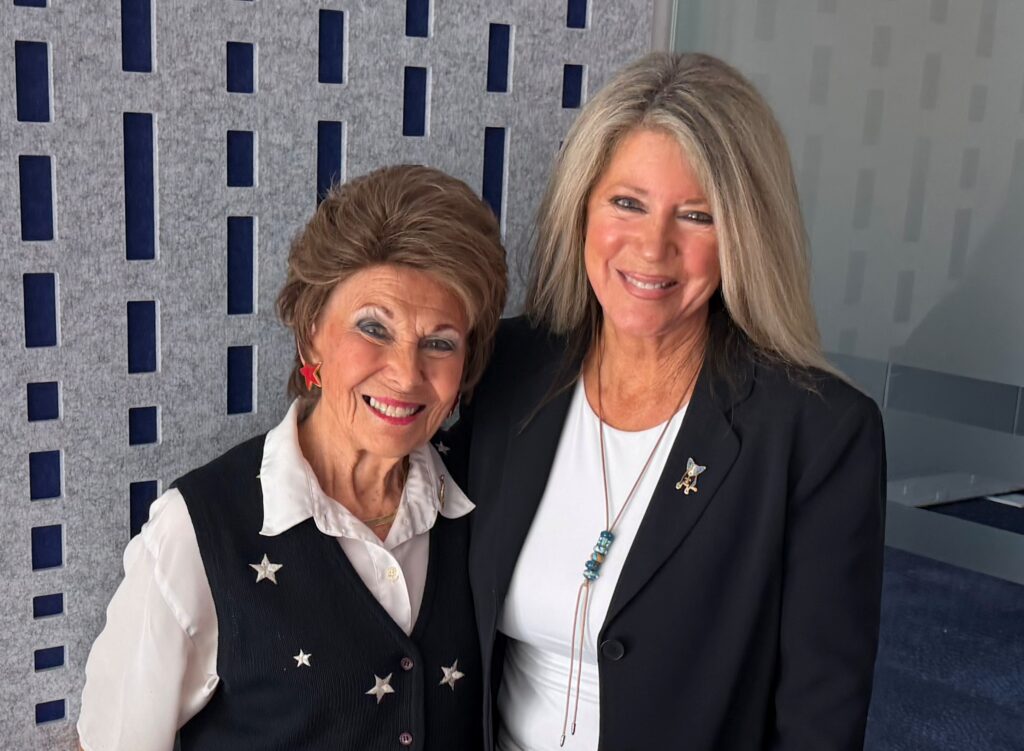
Sylvia Turner, affectionately known to generations of Lafayette families as “Ms. T,” joins Discover Lafayette to reflect upon a remarkable life of teaching, music, faith, and service to others.
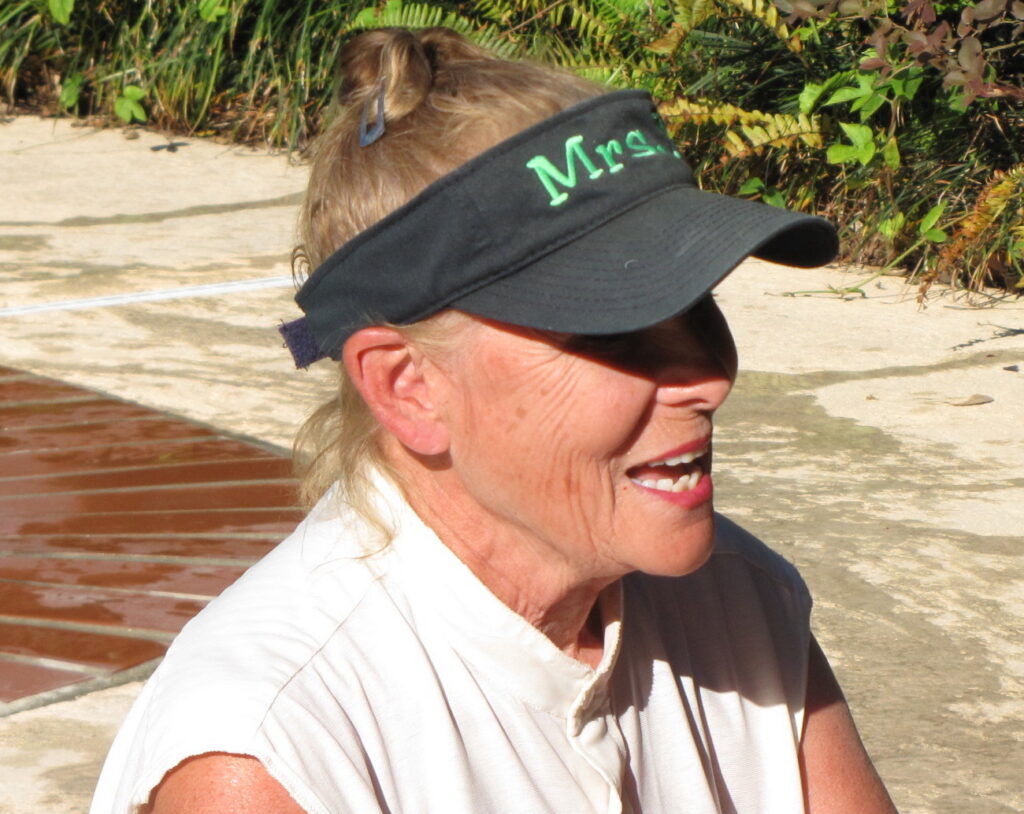
For more than five decades, beginning in 1972, Sylvia taught children and adults to swim in the backyard pool of her Lafayette home. But anyone fortunate enough to have taken lessons from Ms. T knows she taught much more than swimming.
She taught safety. She taught respect. She taught children to encourage one another, to follow rules, to appreciate their parents, and perhaps most importantly, to believe they could do things that initially frightened them.
“One of my greatest compliments was when people would say, ‘You don’t just teach swimming, do you?’” Sylvia recalls. “I said, ‘No, I don’t. I teach everything I can while I can.’”
Two Lives: Ms. T and Sylvia the Singer
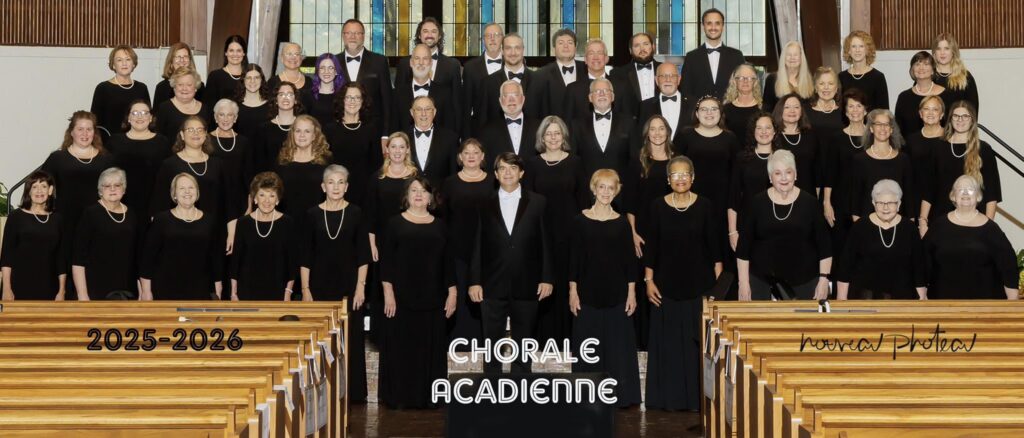
Many Lafayette residents knew Sylvia exclusively as Ms. T, the swim teacher who could spend long summer days in the pool working with one class after another. Others knew an entirely different Sylvia Turner, a classically trained singer whose musical life was intertwined with that of her late husband, John Turner.
Sylvia grew up in Fort Worth, Texas, and came to Lafayette with John, who taught voice at UL for 34 years. Sylvia later received an opera scholarship, and the couple performed opera together as well as singing at university commencement ceremonies.
She also became a fixture at the Order of Troubadours ball, serving as the opening soloist for “Make Believe” for 40 years.
The separation between her two worlds occasionally created funny moments. Sylvia remembers singing at a commencement ceremony when a family approached her afterward, looking puzzled. “Ms. T, is that you? Did you sing?” “Yes,” she answered.
“In the singing world, a lot of people didn’t know that I taught swimming,” Sylvia says. “And then in the swimming world, a lot of people didn’t know that I sang.”
A Fear of Water Leads to a Lifetime in the Pool
It is fitting that Sylvia ultimately devoted so much of her life to teaching people to be comfortable in the water, because she did not learn to swim herself until she was 11 years old.
Her mother, Lucille, had nearly drowned at age 18. The experience was so traumatic that Sylvia grew up repeatedly hearing, “Don’t go near the water.”
Eventually, her mother enrolled her in Red Cross swimming lessons at a park pool. Sylvia loved the water immediately.
At the end of the lessons, the instructor announced a swim meet. Sylvia entered, won a red ribbon for second place, and, as she puts it, “I was hooked.”
Her mother began allowing her to spend time at the pool, where Sylvia became fascinated by a group of young men who were accomplished divers. She simply asked them if they would teach her.
They did. Before long, Sylvia was diving from the three-meter board and later competed as a diver when she was 13 and 14 years old. Eventually, voice training began competing with diving for her attention, but her love of the water never disappeared.
The Pool That Started It All
Sylvia’s path to becoming one of Lafayette’s best-known swim instructors began with a frustrating afternoon at Riverside pool.
Sylvia and her husband, John, were living in River’s Bend with their three children when, on a beautiful sunny day, the lifeguard announced everyone had to leave the pool because he needed to take a test and there was no one qualified to substitute for him.
Sylvia was not pleased. “I went home and I said to my husband, ‘You know, if I had a lifesaving badge, I could have gotten up on the stand and we could have kept the pool open.’”
John’s response was simple: go get it. Sylvia and a friend took a lifesaving class at Girard Park. At the conclusion of the course, the instructor assigned Sylvia two women from a mothers’ swimming program to teach. “My ladies did beautifully,” she remembers. “And so I was further hooked.”
As Sylvia and John prepared to build their new home, she began thinking about adding a swimming pool. The price gave her pause, particularly when they realized it would effectively double their house payment.
Sylvia had an answer. “Oh, John, if I paid for it, could we do it?”
How would she pay for it? “I could teach.” And that is exactly what she did.
Sylvia began teaching swimming lessons in 1972.
Her first student was a young man she met through the grocery store who was preparing to get married. His future wife could swim, he could not, and he did not want to be the person sitting on the beach while everyone else enjoyed the water. Sylvia taught him to swim. Years later, he returned with his children.
It was the beginning of generations of Lafayette families learning from Ms, T.
Safety Came First
Before any child entered Sylvia’s pool, there were rules.
“Children like to know boundaries,” she says. Students first sat on the deck while Sylvia sat at their eye level and talked about safety. Then she walked them around the pool.
Nothing was taken for granted.
She showed them the skimmers. She explained the drain. She taught them what the various parts of the pool did and addressed fears children might be reluctant to express.
That lesson came partly from the children themselves. One little boy looked across the pool at the dark opening of a skimmer and asked Sylvia, “Is that where you keep Jaws?”
From that point forward, Sylvia opened the skimmers so the children could look inside.
“I learned the children are great teachers,” she says. “I learned a lot from children.”
Only after the rules and pool orientation were complete did everyone get into the water.
Teaching Children to Respect One Another
Sylvia’s lessons were intentionally positive.
“I had the children applaud each other all the time,” she says. “We applauded for everything. We didn’t just applaud for excellence. We applauded for effort.”
Criticism was not allowed unless it was constructive. Older swimmers were taught how to watch one another perform a stroke and offer feedback, beginning with something the swimmer had done well.
Sylvia traces much of that philosophy to her mother, who was an exceptionally positive person, and to the instructor who taught Sylvia lifesaving at Girard Park.
“She made you feel like you were the most special person in the world.”
Sylvia wanted children in her pool to feel the same way.
One experience still moves her. A little girl had missed the first day of lessons and joined the class on the second day. When it was her turn to get onto the diving board, she hesitated.
Finally, she turned to Sylvia and asked, “Do they have to watch?” Before Sylvia could say anything, every child waiting nearby turned his or her back. “I can’t tell that story without getting emotional,” Sylvia says.
The children understood that their classmate needed to try something difficult without an audience. “A lot of times we have to do things without people watching.”
“Are You the Boss of This Pool?”
Boundaries mattered because safety mattered.
During one family swim, a visiting child began running around the pool and jumping too close to other swimmers. Sylvia called him over and explained that the pool had rules.
The boy looked at her and asked, “Are you the boss of this pool?” “Yes, I am.” “Oh.” That was the end of the problem.
“Children want to know who’s in charge,” Sylvia says. “And they want somebody to be in charge.”
Those lessons stayed with her students long after class ended.
One mother called Sylvia after taking her children to another pool. Her four-year-old son Nicholas noticed another little boy breaking pool safety rules and corrected him.
The boy replied that his daddy owned the pool and he could do anything he wanted. He added that he took swimming lessons.
Nicholas had an answer: “Well, obviously you don’t take from Ms. T because you don’t know the rules.”
Relaxation and Rhythm
For Sylvia, learning to swim rested on two fundamental principles.
“The two most important things in swimming are relaxation and rhythm.”
Relaxation came first. A tense body does not float well. Students learned to float before progressing incrementally through kicking, strokes, diving and more advanced skills.
“You do it by stages,” Sylvia says. “And that’s how you learn anything really, by little increments.”
The same principle applied to diving. Sylvia never forced a frightened child from the diving board. Students progressed from a knee dive close to the water, to a falling dive, then standing, springing, and eventually diving from the board.
Her goal was not simply for a child to acquire a skill. The child needed confidence in that skill. “If you have a skill without confidence, it’s not really productive.”
Teaching Adults and Overcoming Fear
Although Ms, T is best remembered for teaching children, Sylvia loved teaching adults, particularly because, as she says, “They always have baggage.”
Some carried a fear of water for decades. She taught men, women and couples, including two women who were 71 years old. But no adult student meant more to Sylvia than her own mother.
Lucille’s near drowning at age 18 had shaped Sylvia’s childhood and her mother’s lifelong relationship with water. Then, on her 70th birthday, Lucille surprised Sylvia by announcing a goal for the coming year. “I’ve decided I’m going to learn to swim.”
Sylvia was stunned. Her mother continued: “I’ve decided that if anybody can teach me, it’s you.” Sylvia responded, “Well, you’ll never have to give me another compliment in your whole life.”
Lucille was unable to make the trip to Lafayette that year, but the following year she came and took lessons from her daughter. By the end of the week, she could swim across the pool without assistance.
Sylvia later asked whether she had finally lost her fear. Her mother answered, “I don’t know, but I loved being in the water.” Sylvia thought that was enough.
Of all the adults she taught, she describes teaching her mother as perhaps the most gratifying experience of all.
Generations of Lafayette Families
Sylvia never kept count of how many people she taught during her decades in the pool, particularly because so many students returned year after year and eventually brought another generation back with them.
Her classes grew largely through word of mouth.
Her youngest daughter attended Broadmoor Elementary, where Sylvia was heavily involved in the PTA. The principal, himself the father of seven children whom Sylvia eventually taught along with his wife, allowed her to distribute information about her lessons through the school. “And then word spread.”
For younger children, particularly three and four year olds, Sylvia limited classes to six students and had another adult in the water with her. Older, accomplished swimmers could be taught in somewhat larger groups.
Sylvia also encouraged parents to observe lessons so they understood what their children were learning and could reinforce those lessons away from the pool.
The lessons often carried into everyday family life: respect your parents, appreciate what they do for you, respect other people, encourage others, follow the rules, and understand that safety is never something to take casually.
The Teacher Who Never Taught School
When asked how she defines herself after a lifetime encompassing swimming, opera, church music, family and community, Sylvia returns to teaching. “Every teacher I ever had told me that I was destined to be a teacher.”
Yet she never became a traditional classroom teacher. “I taught Sunday school. I taught junior choir. I taught swimming. I’m an inveterate teacher.”
She also remains a singer, grounded in the classical and religious music that has been part of her life since childhood.
Sylvia grew up in the church. Her mother sang in the choir, her father was a deacon, and Sylvia herself began singing in choir at age 12. Faith remained a constant through the joyful times and the difficult ones.
And that may help explain the extraordinary positivity so many people associate with Ms. T.
Asked how she manages to remain positive, Sylvia acknowledges that it requires intention. “You have to work at it, I think, because it’s easy to be negative.”
Even in the hardest times, she says, there is something to hold onto. “Even in those darkest days, you have to find something. And gratitude is part of it.”
Sylvia looks back on her life with gratitude for the people, experiences and opportunities she has been given, while acknowledging that her life has included hardship like anyone else’s.
“I’ve had some hard knocks, as everybody does during my life. I’m here to say that I overcame them.”
Then she adds the foundation beneath it all: “With the help of my Lord.”
For generations of Lafayette families, Ms. T will always be the woman who taught their children to swim. But her legacy reaches well beyond the pool.
She taught children to be safe without being afraid, to respect rules and one another, to applaud effort rather than simply excellence, and to gain confidence one small step at a time. And she taught it all while making each child feel that, at that moment, they mattered.